Let's Talk About It #10 - Parents Impact On Emotional Wellbeing
The problem starts when a parent fails to recognise that a
child is actually a human being. A separate entity. A whole individual. Many
parents without even realising raise their child to be a reflection of them, a
trophy projecting their ‘good parenting’ and ‘perfect behaviours’. They may be
physically nurturing the child but emotionally and mentally – it is not
happening.
Apparently ‘parent’ is synonymous to ‘provider’.
Yes a parents’ duty is to provide but it becomes problematic
when you believe that is your only role. You have parents that go on about the
sacrifices they make and the food they provide and money they give. You
actually had a choice.
Nobody is saying that they are not grateful because there
are many who neglect their child’s basic needs. However, these things become so
minute when the bigger picture is missing love, positive attachments, security,
motivation and the list goes on…
A parent is much more than a provider. The role of a parent
is to protect, love and teach. You are your child’s first sense of contact.
When they look at you they see protector. When they’re around you they feel
loved. When they listen to you they hear words of encouragement and positive enforcements
and instructions that will guide them to be better.
Instead a child is greeted with pessimistic language,
comparisons to other children; even an imaginary child. A child is told that
they are wrong, and the parent is right even though in the situation there may
be no wrong or right just different perspectives. As the child grows up, they have
feelings of emotional detachment from their parents because they don’t feel
that their parents are approachable with certain things. A child is told what
path to take because it’s what the parent feels is best. The child no longer knows
what love is or respect is; everything is out of fear and worry.
Parents need to recognise that their child is in fact a human
being and follow the golden rule – “treat others as you would like to be treated!”
Why is it when you’re annoyed or irritated it’s ‘I had a hard day at work don’t
chat to me right now?”. Then, when the child is not in the mood to speak because
they have also experienced a difficult time (children and young people go
through stress as well) suddenly it’s “where did all this attitude come from? If
I’m talking to you I expect an answer”.
I always bang on about primary and secondary socialisation.
Primary socialisation are the things that we experience first. What we learn in
our homes. The beliefs that are instilled into us. The values we are initially
taught. Also the type of love we are taught to give others through the actions
of our caregivers. It is most definitely a sensitive period.
Then secondary is what the child learns outside the home.
This is when they develop a sense of self and independence. They learn other
beliefs and values. They hear different music. Experience different cultures
and vibes. Even down to the foods they like and dislike. As the child has their
own brain, they then choose whether or not to adopt these things. If they
choose to adopt these things parents immediately go into fight mode and that’s where
you’ll find the clash. That’s when not being able to recognise your child as an
individual becomes even more of a
problem.
This leads to later issues in a child’s life, well into
adulthood and is an underlying cause of many behaviour patterns and triggers in
a person’s emotional health and mental wellbeing.
Below are examples of the result of emotional neglect by a parent who tries to be controlling and winds up being neglectful (Instagram: @bay.area.therapy)
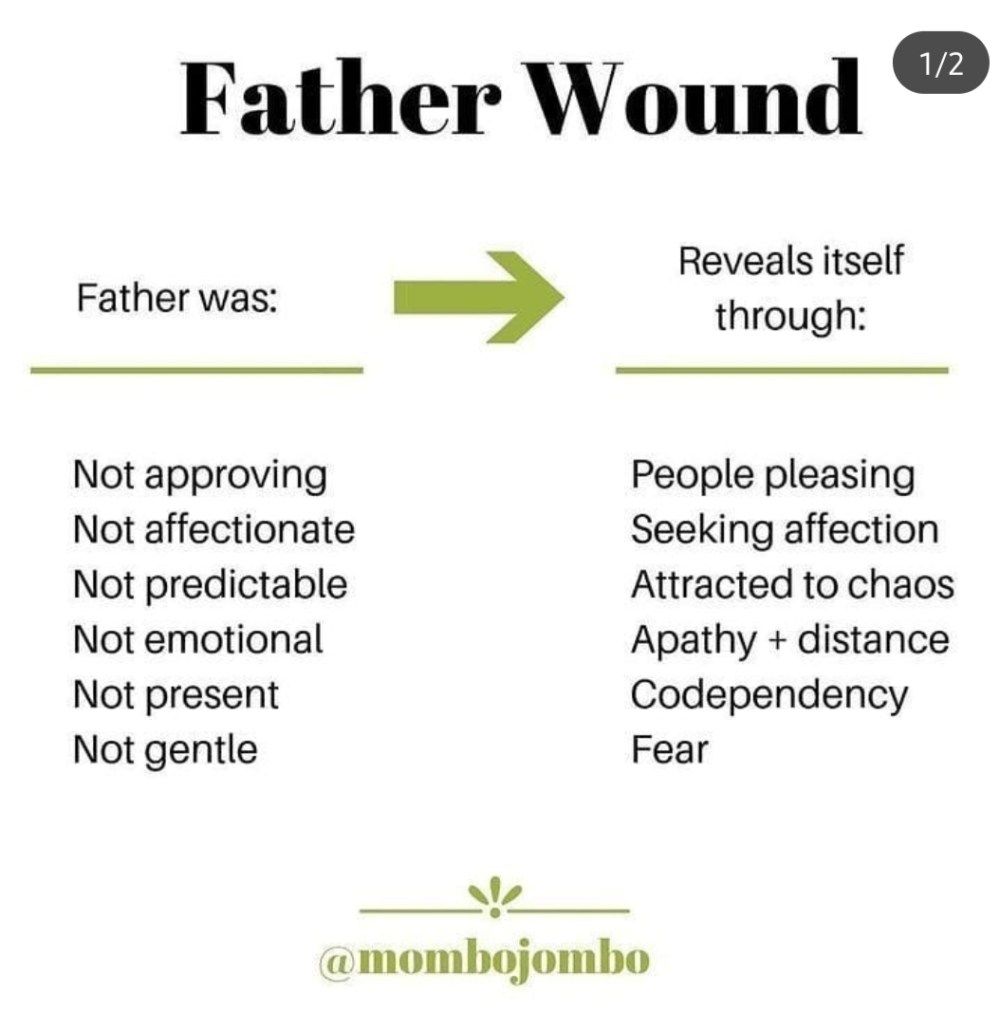
N.B I don't think the actions are specific to mother/father though.
The good news is we can heal and grow. Those words and actions done towards you do not define you. It’s about recognising the triggers and the history of why these feelings and thoughts and behaviour patterns exist within us and healing from it and finding peace then letting go.
My purpose for this post was to highlight that sometimes things we consider “the norm” because we grew up as such and we know others that did, can in fact be detrimental to our mental health. I also wanted to encourage parents to stop and think. Nobody is perfect. Sometimes parents are that way because their parents were that way. Sometimes it’s because many parents are dealing with insecurities themselves and other emotional issues which they then project onto their children. It’s time to break the cycle. Parents should try having open and honest conversations with their children. Being real about their feelings and experiences and giving the child a space to express themselves as well.
There’s oh so much more to this topic and I promise I will
be revisiting it again.
For now, thank you for reading and don’t just acknowledge
mental illness for a day or a week. But be aware of your own mental state and
others for a lifetime.