The "Nocebo Effect": Are Your Thoughts Killing You?
It’s actually a wild question – “are your thoughts killing you?”. But believe me, they just could be.
Let me tell you a story that I heard about that can be found in an article: the story of ‘Mr A’ (I believe it’s a true story).
Mr A was suffering from depression, so he swallowed a bottle of pills in an attempt to kill himself. He began to panic and changed his mind, so he rushed to hospital and ended up passing out when he got there. He had low blood pressure and was hyperventilating. He was taken into care, but the doctors couldn’t seem to find a cause of the problem. The pills he had taken couldn’t be found in his system. A doctor that knew Mr A arrived later and said that the pills Mr A had taken had in fact been sugar tablets as Mr A was actually in a placebo trial.
So what caused the low blood pressure, the hyperventilation? What caused Mr A to pass out?
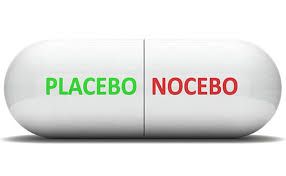
Well I’m sure we’ve all heard of the term ‘placebo effect’ which “is defined as a phenomenon in which some people experience a benefit after the administration of an inactive "look-alike" substance or treatment”. But have you heard of the ‘nocebo effect’?
The ‘nocebo effect’ is really just the opposite of the placebo effect. It happens when a person's negative expectations of treatment lead to negative side effects. This is essentially what happened to Mr A. Some people believe the nocebo effect can even kill you.
The reason I started with that story and those definitions is to highlight just how much your thinking can have an impact on your body, behaviours and overall wellbeing. This quarantine-lockdown period has taught me a lot about myself and my thinking patterns which is why I have put such a big emphasis on reframing mindsets lately.
Did you know your mental health can affect your gut? The brain and your gastrointestinal system are connected. If your gut is having trouble it can send distress signals to the brain causing things like anxiety. This works the other way round as well. Such as when you feel “butterflies” in your stomach. Ever heard about the condition Irritable Bowel Syndrome? This can literally be triggered by a mood disorder.
Your heart health? You’re at a higher risk of developing heart disease and circulatory problems if you struggle with mental illnesses.
Your lungs? Anxiety can affect your breathing (just look at how Mr A was hyperventilating).
Your thoughts literally impact you physically. That adds to the many list of reasons why mental health and wellbeing are so important. Your thoughts could literally be killing you or disturbing your life.
Our brain has the tendency to often amplify thoughts and situations. It exacerbates them and causes us to shift our focus to them. Naturally many of these thoughts our brain focuses on are negative ones. I have no idea why. This can lead to so many problems, especially in terms of our behaviours. When you choose not to heal, grow or detach from situations and thought processes, you’ve now chosen to walk a downward spiral. You wouldn’t leave a broken leg untreated so why negative thoughts? Why trauma? Why unhealthy behaviours because, inevitably, this is what your thoughts will lead to. I’ve recently come to notice my self-sabotaging behaviours, particularly concerning friendships. I run away from friendships and getting too attached because of thoughts I hold such as;
- “People are only out to hurt me”
- “Nobody truly understands/has the capacity to understand me”
- “Everybody can see my faults and hates me for them”
- “If I’m too nice people will think I’m fake”
Or just the simple…
- “I wonder what they’re thinking about me?, why are they looking at me?, when are they going to walk away from me?”
Of course, all of these thoughts come on the back of trauma and heart-breaking experiences. I notice them many times, but I do nothing about them which leads to me pushing people away for no reason whatsoever other than my own thoughts. I also have thoughts where I literally punish and beat myself up with words and as a result end up in a foul mood. Worst thing is, I can blame nobody but myself.
The main thing is addressing that we have a problem. If we never accept or admit that the way we think about ourselves, situations and emotions isn’t healthy then believe, they will never become healthy. I’ve hated and loved getting to know myself more. I’ve hated and loved seeing my flaws and having to deal with them. However, regardless of how we feel, it’s something we have to do.
What this process is not, is being hard and cruel on yourself. We all have some unlearning and learning to do. I talk about reframing mindsets a lot but what I’ve found is that this is 9 times out of 10 useless when you’re already in a negative mindset. The best time to start practicing how to reframe your mindset is when you’re not fostering destructive thoughts so that when they do arise, you’re mentally equipped. For example I have been doing a lot of home workouts and when I get tired it’s very easy to say “I can’t go on. I’m too weak for this or tired”. However, I have began to practice telling myself that I owe it to my body to be fit and healthy. It’s what I deserve. It’s a part of self-care as my body is a temple. So often times during my workouts when I do get tired I remember these things and after a few sips of water and a short break – I’m back at it!
The aim of this post was to just encourage you to understand that your thoughts literally shape your life. If you apply the nocebo effect and placebo effect to different situations I'm sure you will see the difference. Your thoughts affect your entire being. Your thoughts shape you. Watch what you allow in and what you’re putting out (I’m really talking to myself here). This goes back to the biblical principle:
“So above all, guard the affections of your heart, for they affect all that you are. Pay attention to the welfare of your innermost being, for from there flows the wellspring of life” – Proverbs 4:23 (The Passion Translation)
Ps. I must add though, beware of falling into the trap of 'toxic positivity'. Life does get hard and it's okay to be upset. The situations life throws at us sometimes can be hard to handle. It's okay to find things distressing and trialling. It's okay to get irritated and angry. The main thing is how you handle those feelings and whether you allow them to control you or you control them. The important thing is that if you are struggling do ask for help. You're really not alone. Even if it is to just air out your thoughts.