The Paradox of Self-Preservation: Protecting Yourself from Happiness

Self-preservation: the action of keeping yourself safe or alive in a dangerous situation, often without thinking about what you are doing
The above is a definition of self preservation from the Collins Dictionary.
Reading that definition makes me cackle because what comes to mind when you think about dangerous situations? For me, I think about:
- Running out of a burning building
- Hiding from a killer
- Changing our passwords when we’ve been hacked
Even before then, methods we put in place to prevent dangerous situations:
- Having fire drills
- Being aware of our surroundings when walking
- Having tricky passwords
But when we re-read that definition, do we think about other behaviours that we have convinced ourselves are survival instincts? God created us to be human beings of connection and community. Daily, we put in place self-preserving behaviours that push away those who love us, new experiences for connection, and moments of joy.
I've previously spoken about Brene Browne’s concept of foreboding joy and the two tie into one another. We have become so concerned with preventing hurt and losing control that anything that so much threatens that we run from. Or we may put things in place that help us to avoid facing those fears. Whilst we may think we are doing ourselves a tonne of good, our self-preserving behaviours soon become self-destructive.
Think about it - we avoid vulnerability to avoid being hurt, but in reality, we are isolating ourselves and preventing meaningful connections from lasting. We choose to make everyone happy to “keep the peace” when really we are destroying our own peace. We convince ourselves that we are isolating ourselves, to protect ourselves, recharge ourselves, or reconnect - now, on the face of things, the latter can actually be healthy when balanced well. But let's face it, we aren't balancing it well. We are actually increasing our feelings of loneliness. We overwork thinking we're being productive, thinking it will help us be fulfilled. In reality, we are neglecting the ones we love and constantly craving the next achievement to be satisfied.
Feel called out yet? I hope so.

Think about other preservation methods you're actively engaging in. Are they really preserving you or are you having that constant battle within?
First step is to recognise these behaviours. Recognising patterns of behaviours. This includes triggers of these behaviours and when they may have started. Many of these self protective methods we exhibit are things we have had to learn from past hurts and situations. It's key to realise that we are no longer in those situations and are allowed to be free.
As much as I preach self love, it's important to recognise your flaws and correct these behaviours. This is arguably a form of self love - trying to better your mindset and change in positive ways. This does not mean condemn yourself, but speak to yourself as though you are a friend offering support.
Thirdly, it's time to step out of those behaviours. Push yourself past your usual protective methods. This looks so different for each individual. Whether this be confiding in a friend or loved one, asking someone to go to coffee, responding to that group chat with an emoji, relaying your own needs that you wish to be met and the list goes on…
If I'm honest, this post isn't only for others but for me also. I'm so scared of pain. I'm so scared of being hurt. I'm petrified of being abandoned. I worry about people finding my personality overbearing. I tend to retreat, to hide, to stay silent. These are all behaviours I'm slowly unlearning. I try to visit friends to the point that my caribbean parents' favourite word to use when it comes to me is gallivanting (if you know, you know). I write these blogs to open up even when I can't open up to friends. I actively try to stay out of my head and talk myself out of my feelings. I journal, I pray. Because I'm fighting feelings at times.
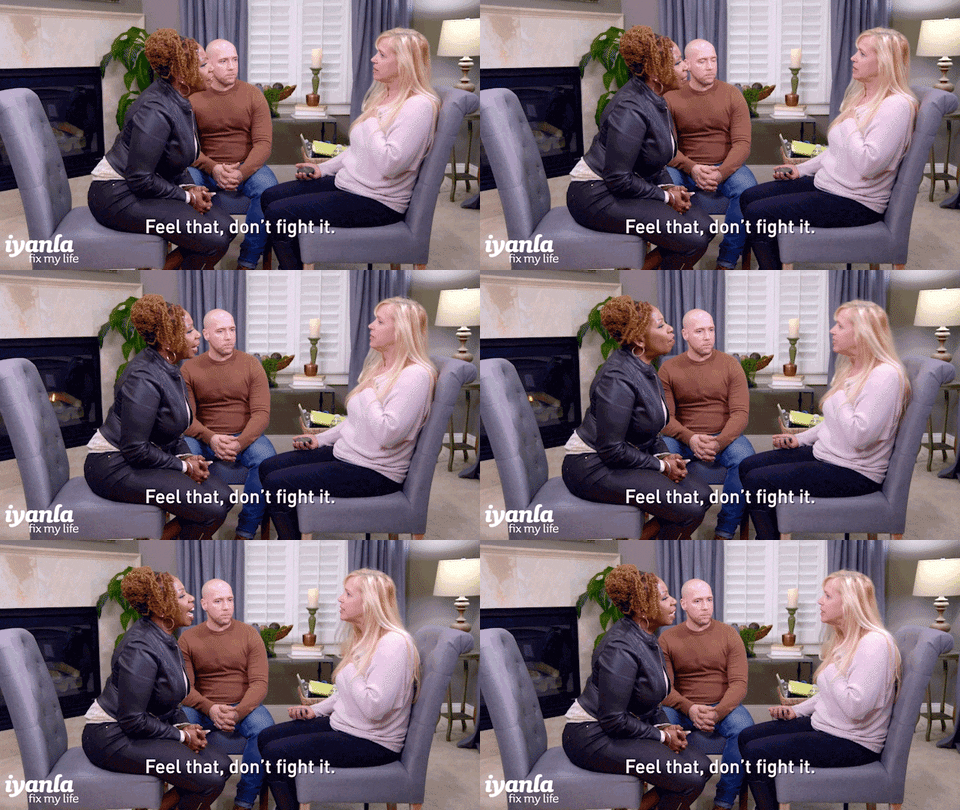
Feelings are not there to dictate life, to steal life, to steal joy. Feelings are not there to keep us in a box. Feelings are not always fact. Feelings are fleeting. We acknowledge our feelings, but we don't act upon them in every situation. That wouldn't be wise. That would be destructive. That is what we are aiming to avoid.
I write this post to encourage us to analyse our behaviours and make vital adaptations to our behaviour patterns. If we don't, we will sacrifice community and loved ones and that joy we so desperately seek because we are constantly closing ourselves off from it without even knowing.